

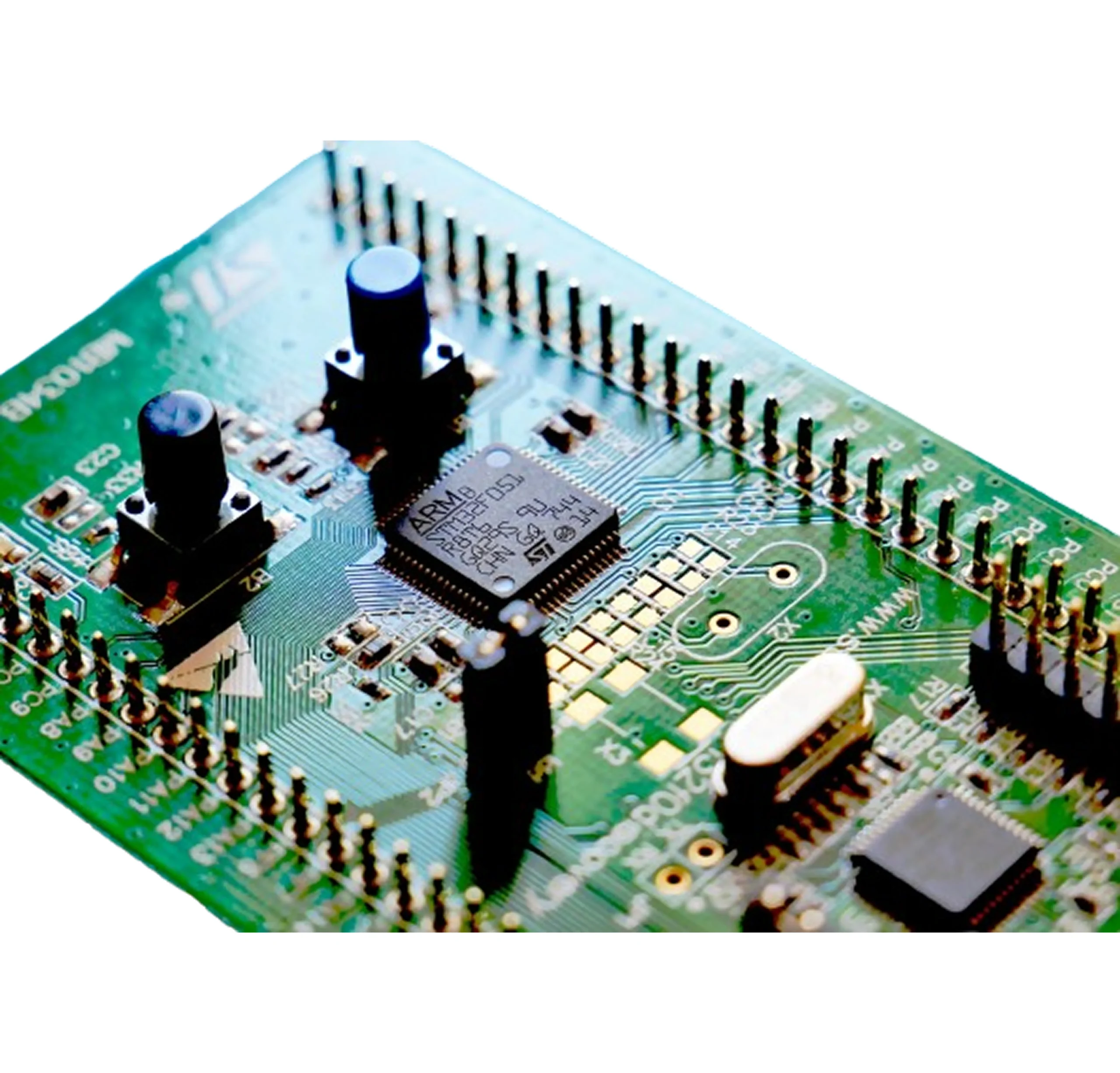
Most buyers choose between turnkey and partial turnkey assembly on price. That is the wrong variable. The real difference is who carries component risk — long lead times, allocation, counterfeit exposure, lifecycle end-of-life, and the cost of a part that arrives wrong.
This article compares the three sourcing models in procurement terms: who buys what, where risk sits, how alternates get approved, and how each model changes your cash flow and your schedule. YC PCB runs turnkey assembly with in-house BOM management and component sourcing, and also accepts customer-consigned material.

The Three Models
| Full turnkey | Partial turnkey | Consigned (customer-supplied) | |
|---|---|---|---|
| Bare board | Supplier | Supplier | Supplier or customer |
| Composants | Supplier buys all | Supplier buys some, customer supplies the rest | Customer supplies all |
| Component risk | Supplier | Split by part | Customer |
| Cash flow | One invoice, after delivery | Split | You pay component suppliers directly, often up front |
| Schedule control | Supplier manages | Shared | Yours, but so is the delay when a part is late |
| Typical use | New products, small teams, fast ramp | Critical or sole-source parts, existing inventory | Established OEMs with approved AVL and stock |
"Partial turnkey" means different things to different suppliers, so pin it down in writing: which reference designators are supplied by whom. A percentage split is not a specification.
Who Should Choose Full Turnkey?
When one invoice is worth the lost visibility
Full turnkey suits you when:
- You do not have an approved vendor list or an established component supply chain
- Your volumes are modest, so you cannot access distributor pricing or allocation
- You want one party accountable for the finished assembly
- Your team is small and engineering time is better spent on design than purchasing
- cURL Too many subrequests by single Worker invocation. To configure this limit, refer to https://developers.cloudflare.com/workers/wrangler/configuration/#limits
cURL Too many subrequests by single Worker invocation. To configure this limit, refer to https://developers.cloudflare.com/workers/wrangler/configuration/#limits.
cURL Too many subrequests by single Worker invocation. To configure this limit, refer to https://developers.cloudflare.com/workers/wrangler/configuration/#limits
cURL Too many subrequests by single Worker invocation. To configure this limit, refer to https://developers.cloudflare.com/workers/wrangler/configuration/#limits
- cURL Too many subrequests by single Worker invocation. To configure this limit, refer to https://developers.cloudflare.com/workers/wrangler/configuration/#limits
- cURL Too many subrequests by single Worker invocation. To configure this limit, refer to https://developers.cloudflare.com/workers/wrangler/configuration/#limits
- cURL Too many subrequests by single Worker invocation. To configure this limit, refer to https://developers.cloudflare.com/workers/wrangler/configuration/#limits
- cURL Too many subrequests by single Worker invocation. To configure this limit, refer to https://developers.cloudflare.com/workers/wrangler/configuration/#limits
cURL Too many subrequests by single Worker invocation. To configure this limit, refer to https://developers.cloudflare.com/workers/wrangler/configuration/#limits the interface becomes the risk. If the supplier's material and your material are both late, the schedule slips and nobody owns it. Define the handover: who inspects incoming consigned material, who is responsible for damage in storage, and what happens if a consigned part is out of specification.
Who Should Choose Consigned Assembly?
Consigned assembly suits established OEMs with a real supply chain: approved vendors, negotiated pricing, incoming inspection capability and inventory management.
It is the wrong choice for a first product or a small team, because the hidden costs are administrative: you become the buyer, the incoming inspector, the shortage chaser and the owner of every allocation problem.
Where the Risk Actually Sits
Five risks, three allocations
Component risk has five components, and each model allocates them differently:
- Price risk — who absorbs a price increase between quote and build
- Availability risk — who owns the schedule when a part is on allocation
- Quality risk — who owns a counterfeit or out-of-spec part
- Lifecycle risk — who monitors end-of-life and proposes a last-time buy
- Alternate risk — who decides that a substitute is acceptable
In full turnkey, the supplier carries 1–4 and usually proposes 5 for your approval. In consigned, you carry all five. Partial turnkey splits them, which is exactly why it needs a written matrix.
The risk allocation matrix
Use this as the attachment to a PO. The middle columns are what people argue about three weeks into a build, so agree them while the mood is good.
| Risk | Full turnkey | Partial turnkey | Consigned |
|---|---|---|---|
| Price increase between quote and build | Supplier, within the quote validity window | Party that supplied the affected part | Customer |
| Allocation or long lead time | Supplier chases, supplier owns the date | Split by part — needs dated handover per line | Customer |
| Counterfeit or out-of-spec part | Supplier | Whoever supplied it, with incoming records to prove it | Customer |
| End-of-life notice | Supplier monitors and notifies | Shared — customer confirms acceptance | Customer |
| Substitute approval | Supplier proposes, customer approves in writing | Per the category rule, per part | Customer decides and instructs |
| Schedule slip caused by material | Supplier | Most disputed cell in the table — fix it in writing | Customer |
| Excess and unused material | Per agreed policy at order close | cURL Too many subrequests by single Worker invocation. To configure this limit, refer to https://developers.cloudflare.com/workers/wrangler/configuration/#limits | cURL Too many subrequests by single Worker invocation. To configure this limit, refer to https://developers.cloudflare.com/workers/wrangler/configuration/#limits |
| cURL Too many subrequests by single Worker invocation. To configure this limit, refer to https://developers.cloudflare.com/workers/wrangler/configuration/#limits | Supplier | cURL Too many subrequests by single Worker invocation. To configure this limit, refer to https://developers.cloudflare.com/workers/wrangler/configuration/#limits | cURL Too many subrequests by single Worker invocation. To configure this limit, refer to https://developers.cloudflare.com/workers/wrangler/configuration/#limits |
cURL Too many subrequests by single Worker invocation. To configure this limit, refer to https://developers.cloudflare.com/workers/wrangler/configuration/#limits, cURL Too many subrequests by single Worker invocation. To configure this limit, refer to https://developers.cloudflare.com/workers/wrangler/configuration/#limits, cURL Too many subrequests by single Worker invocation. To configure this limit, refer to https://developers.cloudflare.com/workers/wrangler/configuration/#limits, cURL Too many subrequests by single Worker invocation. To configure this limit, refer to https://developers.cloudflare.com/workers/wrangler/configuration/#limits — a dated handover list and an incoming inspection record cost an hour and settle most disputes.
The Alternate-Part Question
This is the single clause that causes the most disputes.
A BOM lists a specific manufacturer part number. If that part is unavailable, three things can happen:
- The supplier stops and asks — safest, slowest
- The supplier substitutes within an approved list — fast, requires the list to exist
- The supplier substitutes by value and package — fast, and a specification change you did not approve
Write the rule before the build starts. A workable structure:
| Catégorie | Rule |
|---|---|
| Critical (MCU, RF, analogue front end, connectors) | No substitution without written approval |
| Form-fit-function equivalent | Substitution allowed within a pre-approved list |
| Passives with wide tolerance | Substitution allowed with same value, dielectric and voltage rating, reported after the fact |
| Anything with a regulatory impact | No substitution, ever, without re-qualification |
How Test Responsibility Shifts
In a turnkey programme, the supplier fabricates, assembles and tests, so a defect cannot be passed between parties. In a consigned programme, a failure can originate in your material, the fabrication or the assembly — and attribution becomes a joint investigation.
If you consign material, agree in advance:
- Incoming inspection scope and who performs it
- What happens to material that fails assembly due to supplier-caused damage
- Whether the assembly house tests consigned parts before use
- The rework policy and who pays for rework caused by consigned material
Where Buyers Usually Get This Wrong
Comparing unit prices across models. A full turnkey quote includes component cost, sourcing labour and risk. A consigned quote excludes all three. The numbers are not comparable without a cost breakdown.
Assuming turnkey means no visibility. Ask for the BOM cost breakdown and the MPN list actually purchased. Most suppliers will provide it.
Leaving the AVL undefined in partial turnkey. "We'll supply the ICs" is not a specification. It needs reference designators, quantities and delivery dates into the assembly house.
Ignoring cash flow. Consigned assembly often means paying component distributors up front and the assembly house later. Full turnkey usually means one payment after shipment. For a growing company, that difference can matter more than the unit price.
Forgetting lifecycle monitoring. In full turnkey, ask who watches for end-of-life notices and how they are communicated. In consigned, that job is yours.
Decision Checklist
- Map the five risk categories and decide which you are equipped to carry.
- If partial: list reference designators supplied by each party, with delivery dates.
- Write the alternate-part rule by category, in the BOM or the PO.
- cURL Too many subrequests by single Worker invocation. To configure this limit, refer to https://developers.cloudflare.com/workers/wrangler/configuration/#limits.
- cURL Too many subrequests by single Worker invocation. To configure this limit, refer to https://developers.cloudflare.com/workers/wrangler/configuration/#limits.
- cURL Too many subrequests by single Worker invocation. To configure this limit, refer to https://developers.cloudflare.com/workers/wrangler/configuration/#limits.
- cURL Too many subrequests by single Worker invocation. To configure this limit, refer to https://developers.cloudflare.com/workers/wrangler/configuration/#limits.
- cURL Too many subrequests by single Worker invocation. To configure this limit, refer to https://developers.cloudflare.com/workers/wrangler/configuration/#limits.
FAQ
cURL Too many subrequests by single Worker invocation. To configure this limit, refer to https://developers.cloudflare.com/workers/wrangler/configuration/#limits
cURL Too many subrequests by single Worker invocation. To configure this limit, refer to https://developers.cloudflare.com/workers/wrangler/configuration/#limits.
cURL Too many subrequests by single Worker invocation. To configure this limit, refer to https://developers.cloudflare.com/workers/wrangler/configuration/#limits
cURL Too many subrequests by single Worker invocation. To configure this limit, refer to https://developers.cloudflare.com/workers/wrangler/configuration/#limits.
What must a partial turnkey agreement state?
Three things: exactly which reference designators each party supplies, the delivery date each party commits to, and who inspects and accepts the consigned material on arrival. A percentage split, or "we'll supply the ICs", is not an agreement — it is the start of a dispute.
Can I change sourcing models between orders?
Yes, and many programmes do: turnkey for the first build while the design settles, then partial once you have negotiated pricing on the expensive parts. What should not change is the documentation standard — the alternate rule, incoming inspection and test scope need to stay identical across models, or your quality data stops being comparable.
Why YC PCB
- 20+ years of PCB and PCBA manufacturing, exporting to 20+ countries
- Full turnkey assembly with in-house BOM management, component sourcing and alternate confirmation
- Consigned and partial turnkey models accepted, with the supply split documented per order
- SMT, THT/DIP, mixed technology, BGA/QFN/Micro-BGA
- AOI, electrical test, X-Ray, ICT and FCT per project scope; IC programming and box build available
- cURL Too many subrequests by single Worker invocation. To configure this limit, refer to https://developers.cloudflare.com/workers/wrangler/configuration/#limits
- ISO 9001 and UL certification; RoHS compliance documentation on request
Get a Quote — Send your Gerber, BOM, centroid file and assembly drawing, and tell us which parts you intend to consign. Our engineers reply with a sourcing assessment, DFM notes and pricing within one working day.


 French
 English
 Japanese
 German
 Spanish
 Italian
 Portuguese
 Russian
 Dutch
 Turkish
